In the dynamic world of entrepreneurship, safeguarding your business isn’t just recommended—it’s essential. With the myriad challenges that small businesses face, understanding and leveraging the right commercial insurance can be your secret weapon. Dive in with us as we explore the world of three indispensable small business insurances that can shield your business against unforeseen adversities.
Imagine turning your business vision into reality without the constant worry of unexpected pitfalls. By strategically selecting the right insurance, you can enhance your business’s resilience and focus on growth. Let’s unlock the potential of these insurance types, ensuring your enterprise isn’t just surviving, but thriving!






Types of Small Business Insurance
In the dynamic world of small business, having the right insurance can mean the difference between thriving and merely surviving. It’s about safeguarding your business’s future.
Insurance policies provide essential protection against various risks that businesses face daily. From property damage to liability issues, understanding the types of insurance that align with your business needs is crucial. Below, we explore key insurance types and demonstrate how they serve diverse sectors.
Understanding Business Owner’s Policy (BOP)
A Business Owner’s Policy, or BOP, combines general liability and property insurance into a single package. This is particularly beneficial for small to medium-sized businesses in need of comprehensive protection with cost efficiency.
Most frequently, BOP is suitable for restaurants, retail stores, and professional offices. Benefits include simplified insurance management and savings on premiums due to bundled policies.
Professional Liability Insurance: “Errors and Omissions”
This insurance is designed to protect professionals such as consultants, accountants, and lawyers from claims of negligence or inadequate performance. It’s not just about protecting lawyers from malpractice; it extends to any profession where expertise could come under scrutiny.
By providing coverage against lawsuits and compensation demands, professional liability insurance ensures that service quality issues don’t cripple your business.
Commercial Auto Insurance for Business Vehicles
For businesses utilizing vehicles to operate—be it delivery trucks or company cars—commercial auto insurance is indispensable. This type of coverage includes protection for damages from road accidents or thefts involving vehicles owned by the business.
The key benefits encompass legal liability, medical expenses, and repair costs, offering peace of mind whether you’re a florist with a delivery van or a contracting business with multiple vehicles.
Workers’ Compensation Insurance: Protecting Your Workforce
Ensuring the safety and well-being of your employees is not only responsible but often a legal requirement. Workers’ compensation insurance covers medical expenses and lost wages for employees injured on the job.
This coverage applies universally to businesses with employees, guaranteeing that your team’s health and financial stability are protected in case of workplace accidents.
| Type | Coverage | Suitable for | Key Benefits |
|---|---|---|---|
| Business Owner’s Policy (BOP) | General Liability, Property | Retailers, Offices, Restaurants | Cost-effective, Comprehensive |
| Professional Liability | Negligence, Errors | Service Providers, Consultants | Liability Protection, Client Confidence |
| Commercial Auto | Vehicle Damage, Liability | Delivery Services, Contractors | Road Safety, Asset Protection |
| Workers’ Compensation | Injury, Lost Wages | All Employers | Workplace Safety, Legal Compliance |
“Insurance is the safety net ensuring your business bounces back from unforeseen events.”
Importance of Commercial Insurance for Small Businesses
In the bustling world of entrepreneurship, commercial insurance stands as a guardian angel for small businesses, fortifying them against unforeseen challenges. The peace of mind it provides is as valuable as the financial protection it renders.
Commercial insurance offers a lifeline when unpredictable events threaten to topple a budding business. From natural disasters to lawsuits, having this safety net ensures that businesses can survive and thrive even in tough conditions. The importance of security cannot be overstated in the competitive marketplace where risks are part and parcel of daily operations.
Real-Life Scenarios: The Shield of Insurance
Consider the tale of a flourishing bakery that was hit by an unexpected fire. Without insurance, recovery would have been a distant dream, but with a comprehensive commercial policy, the ovens were back to baking in no time. In another scenario, a tech startup faced a hefty lawsuit due to a data breach. Thanks to their liability insurance, they managed to cover legal expenses and continue innovating without a financial collapse. These instances illuminate how insurance acts as a foundation upon which resilience is built.
The Role of Insurance in Risk Management for Startups
In the nascent stages of a business, the path is filled with unknowns. Here, insurance doesn’t just offer protection; it becomes an integral part of strategic risk management. Consider insurance as a strategy for stability, enabling startups to navigate through the uncertainties without debilitating financial distress. With the confidence insurance provides, entrepreneurs are empowered to focus on growth and innovation, knowing that their hard-earned assets and brand reputation are safeguarded.
Cost Factors in Small Business Insurance
When it comes to securing your small business, understanding the factors influencing insurance costs can be as crucial as the coverage itself. Let’s delve into the elements that drive these variations and how you can manage them to your advantage.
The cost of small business insurance is not a one-size-fits-all number. It is determined by several dynamic factors ranging from the nature of the business to its geographical location. Industry, business size, risk exposure, and claims history also play a significant role in determining the premium.
Key Elements That Influence Insurance Costs
The insurance premium for your small business can be affected by a myriad of factors. Here are some of the pivotal ones:
- Type of Business: Depending on the industry, some businesses are considered riskier and may have higher premiums.
- Location: The geographical area can drastically affect the cost due to local laws, crime rates, and natural disaster likelihood.
- Business Size: Larger companies typically have higher premiums due to greater exposure and risk factors.
- Claims History: Businesses with fewer past claims often benefit from lower premiums.
- Coverage Amount: Higher coverage limits naturally lead to increased premiums.
Regional Cost Variations
Geography plays a significant role in determining insurance premiums. Factors such as state regulations and climate risks, like hurricanes or earthquakes, can influence costs. Here’s a comparative glance:
| State/Region | Average Premium |
|---|---|
| California | $1,200 |
| Texas | $1,000 |
| New York | $1,500 |
| Florida | $1,800 |
Methods to Reduce Insurance Costs
While it seems complex, reducing insurance costs while maintaining sufficient coverage is feasible with a strategic approach. Here are some effective cost-saving methods:
A proactive approach to risk management can significantly reduce your insurance costs without compromising on coverage quality.
- Bundle Policies: Combining various business insurance policies can lead to discounts.
- Increase Deductibles: Opting for a higher deductible can lower your premiums, but ensure you can afford the out-of-pocket costs.
- Implement Safety Programs: Enhancing safety protocols can decrease risk and thus insurance expenses.
- Regularly Review Coverage: Annual reviews of your policies keep you aligned with your current business needs and avoid paying for unnecessary coverage.
Selecting the Right Insurance for Your Business
:max_bytes(150000):strip_icc()/BestCommercialBusinessInsuranceCompanies_final-a23ae3f101fb4e749d31e3855a979a95.png "Best Commercial Insurance for Small Businesses")
Navigating the world of small business insurance can feel daunting, but selecting the right insurance policy is critical to safeguarding your company’s future. It’s about finding a balance between cost and coverage that aligns perfectly with your business’s unique risks and needs.
Understanding what insurance your small business truly needs starts with familiarizing yourself with the types of policies available, evaluating the risks specific to your industry, and deciding what coverage is essential for your peace of mind.
Steps to Identify the Correct Insurance Policy
Begin your journey by assessing the various aspects of your business that need protection. Purpose-driven evaluation at this stage can lead to insightful discoveries about what your policy should ideally cover.
- Evaluate risk factors specific to your industry.
- Consider the size and scale of your business operations.
- Identify all potential liabilities that could affect your business.
- Determine the value of your physical and digital assets.
- Consult with professionals to verify your assessments and decisions.
Checklist for Business Owners to Assess Insurance Needs
Creating a thorough checklist not only streamlines the process but also ensures you have a comprehensive view of your insurance requirements.
- List your business’s most valuable assets.
- Identify areas where you are legally required to have insurance.
- Appraise potential business interruption risks.
- Prioritize employee-related coverages such as workers’ compensation.
- Make note of past claims or risk events as reference points.
“Insurance is not just an expenditure; it is an investment in the sustainability and security of your business.”
Working with Insurance Brokers
A trusted insurance broker can be an invaluable part of your team, offering specialized knowledge and helping you navigate the complexities of business insurance.
Your collaboration with a broker should be seen as a partnership where the broker acts as an advisor, and you, as the decision-maker, hold the reins.
| Step | Description |
|---|---|
| Consultation | Discuss your needs and business landscape to get personalized insurance advice. |
| Comparative Analysis | Utilize the broker’s resources to compare policy options and coverage limits. |
| Customization | Tailor the policy to suit your business-specific requirements. |
| Policy Review | Regularly review and adjust policies as your business evolves. |
Legal Requirements of Commercial Insurance
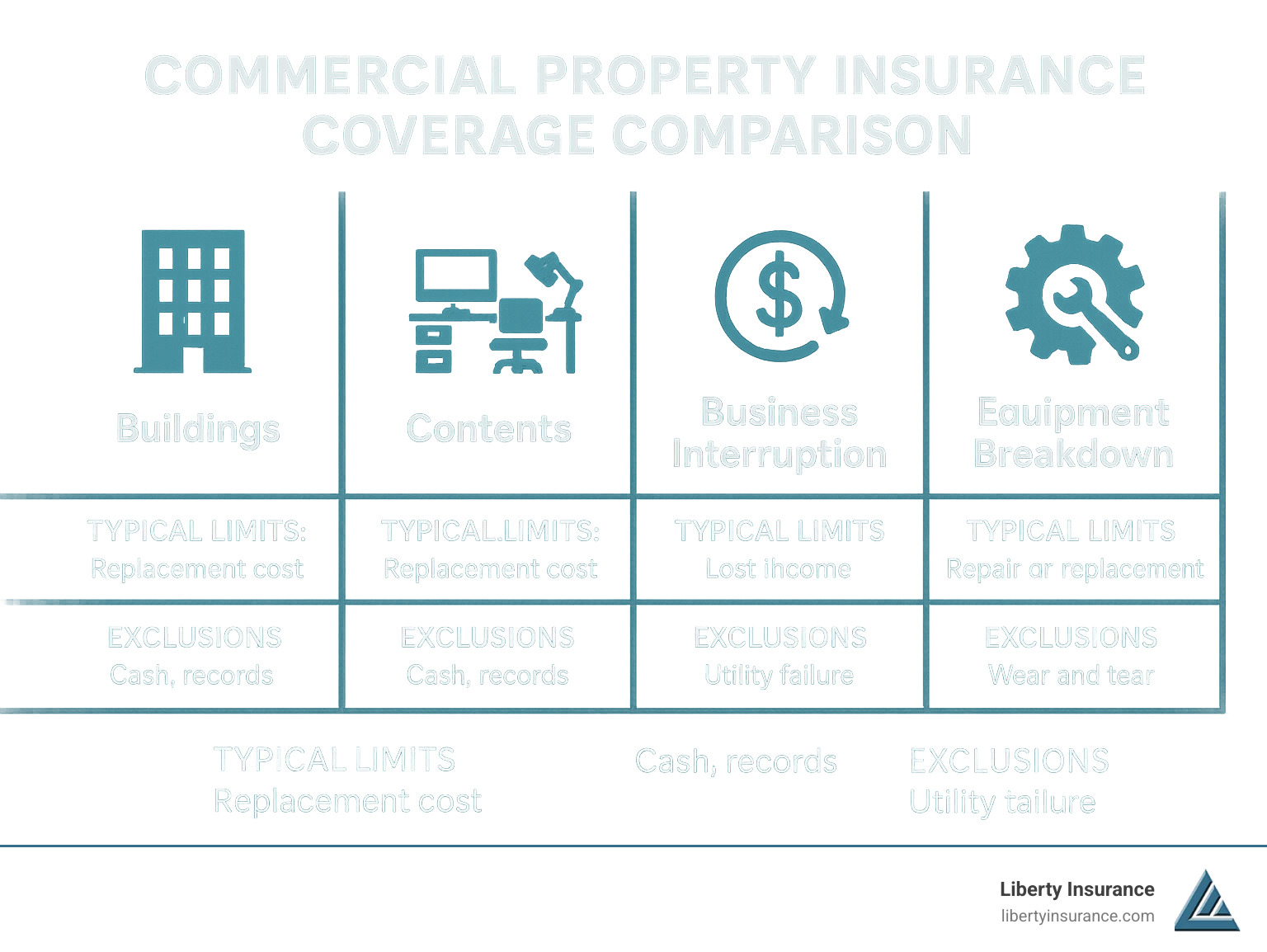
Turning your entrepreneurial dreams into reality involves not just passion, creativity, and hard work, but also a keen understanding of the legal frameworks that guide your success. Among these is comprehending the legal necessities surrounding commercial insurance for your business.
Small businesses are not exempt from legal obligations concerning commercial insurance. Ensuring compliance with these insurance requirements is vital to safeguard your enterprise from unforeseen mishaps and legal consequences.
Legal Obligations and Their Impact on Your Business
Understanding the legal obligations related to commercial insurance is essential. Failure to comply can lead to devastating consequences, both financially and reputationally. Here’s how the legal landscape shapes up for small business insurance obligations and the risks of neglecting them:
- General Liability Insurance: Often mandatory for all businesses, covering bodily injury, property damage, and personal injury.
- Workers’ Compensation Insurance: Required in most states, it covers medical costs and lost wages for employees injured on the job.
- Professional Liability Insurance: Especially crucial for service-based industries, safeguarding against claims of negligence and errors.
- Commercial Auto Insurance: Necessary for businesses owning vehicles used for operations, protecting against accidents and damages.
- Unemployment Insurance: Typically mandated by federal and state regulations, providing temporary financial assistance to unemployed workers.
Operating without these mandatory insurance policies can attract heavy penalties, legal actions, and in severe cases, could lead to shutdowns of your business. Dodging compliance isn’t worth the risk.
“Ensuring your business is fully insured not only meets legal requirements but also fortifies your enterprise against the unpredictable.”
Claims Process for Small Business Insurance
When unexpected events occur, understanding the claims process can be vital for the survival of your small business. A smooth claims process can restore operations promptly and minimize financial disruption.
Filing an insurance claim can seem daunting, but with an organized approach, it’s manageable. Before getting started, ensure you’re familiar with your policy details and have all the necessary documentation at hand.
Steps to File an Insurance Claim
To navigate through the claims process efficiently, follow this structured guide:
| Step | Action | Tips |
|---|---|---|
| 1 | Contact Your Insurance Provider | Notify promptly to avoid delays; have your policy number ready. |
| 2 | Gather Necessary Documentation | Compile photographs, receipts, and any relevant correspondence documented at the time of the incident. |
| 3 | Complete Claim Forms | Ensure all information is accurate and complete to prevent processing delays. |
| 4 | Submit Claim and Follow-Up | Regularly check the status; establish a timeline with your adjuster. |
| 5 | Cooperate with Adjuster | Provide detailed accounts of the incident; honesty is crucial. |
| 6 | Review Settlement Offer | Ensure the offer meets your policy terms before acceptance. Consult legal advice if necessary. |
Common Claim Pitfalls and How to Avoid Them
During the claims process, various pitfalls can hinder or delay your outcome. By being proactive, you can sidestep these challenges effectively:
Frequently, small business owners fall into the trap of not thoroughly understanding their policy details. This oversight can result in rejected claims due to misunderstood coverage.
- Keep a dedicated file with all relevant policy documentation and update it regularly.
- Timely communication is key. Delay in reporting claims is one of the most prevalent issues. Establish a clear line of communication with your insurer.
- Be aware of policy exclusions and keep track of deadlines for claim submissions. Missing these can lead to denied claims.
- During all communications, focus on accuracy and honesty. Exaggeration or omissions can complicate the resolution process.
“The insurance claim process doesn’t have to be overwhelming. With preparedness and attentiveness to detail, it can be a straightforward experience.”
Conclusion
In the journey of business, having the right insurance coverage can make all the difference between navigating stormy waters or sinking altogether. By investing time in understanding your insurance needs, you not only protect your present but also secure your business’s future. As you venture forward, remember that the right insurance paves the way for innovation, security, and peace of mind. Let these three insurance types be the cornerstone of your business’s success story.
FAQ
What are the primary types of small business insurance?
The primary types of small business insurance include General Liability Insurance, Property Insurance, and Workers’ Compensation Insurance.
Why is commercial insurance important for my startup?
Commercial insurance is crucial as it protects your business from potential financial losses due to unforeseen events like lawsuits, natural disasters, or employee injuries.
How can I reduce the cost of my small business insurance premiums?
You can reduce costs by bundling policies, increasing deductibles, implementing risk management strategies, and regularly reviewing and updating your insurance coverage.
Is it mandatory for my small business to have insurance?
Legal requirements vary by industry and location. However, certain types of insurance, such as Workers’ Compensation, are often legally required.
What should I do in the event of needing to make an insurance claim?
Document all details of the incident, contact your insurance provider promptly, and follow their specific claim process to ensure timely resolution.